

The Configuration Tracker landed a week ago, and 1.1.1 is the fast follow: one new capability and two fixes that came straight from watching the thing run under real load.
CEF, for the SIEM you already have
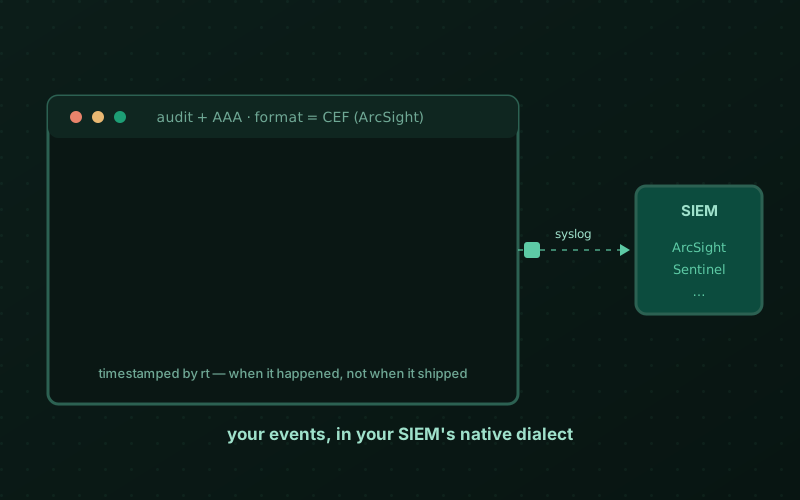
Taranac has always forwarded its audit and AAA events over syslog. Now it can speak your SIEM’s native dialect: pick CEF (ArcSight) as the format on a syslog destination and every event ships in Common Event Format, ready for ArcSight, Microsoft Sentinel and the many other tools that parse CEF out of the box — alongside the plain RFC 3164 and RFC 5424 you already had.
The detail that matters for correlation: each event carries the canonical rt
event-time field, so it’s timestamped by when it happened, not when the
collector got around to it — no timezone drift smearing your timeline.
The JIT fix real load asked for
In the 1.1.0 post we made a lot of noise about just-in-time credentials — a password minted for a single collection run, then rotated away. Honest confession: the first cut minted that password per run, and the moment two collections hit the same JIT account at once — exactly what happens when you point one credential at a rack of devices — the second job tripped over the first and failed.
The fix is the version we should have shipped: the minted password is now an account-scoped “warm” lease. Every concurrent collection on that account borrows the same live password and logs in in parallel, and the password is rotated once it goes idle — never yanked out from under an in-flight login. Same security story — no long-lived secret, nothing a human ever sees — now with the concurrency a real fleet actually needs.
Backups that survive an update
A quieter fix, and the kind of quiet you want from infrastructure: the backups directory now lives on a named volume. Recreate the container, pull a new image — your backups are still there, instead of quietly vanishing with the old container. Boring. Correct. Exactly what a backup is supposed to be.
There’s also a small structural tidy-up: for SCP/SFTP sources the remote path now lives on a file recipe, matching how HTTP recipes already work — the source describes the connection, the recipe describes what to fetch. Existing sources migrate themselves on upgrade.
Self-hosted, artifact-only, Elastic License 2.0. Small release, quick turnaround — that’s the cadence we’re aiming for.