

AAA is the kind of infrastructure nobody notices until it’s gone. When your TACACS+ server takes a nap, engineers can’t log into switches; when RADIUS blinks, 802.1X ports stop letting laptops on. So the request we heard most after the RC was blunt: “what happens when the box dies?”
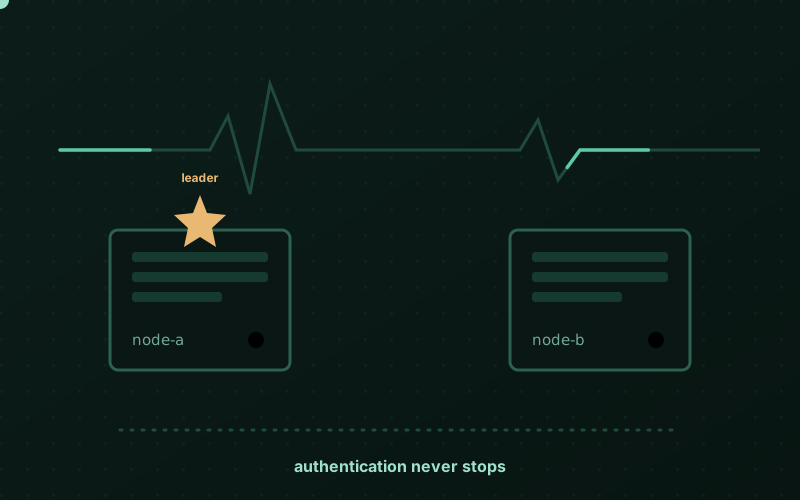
For the last few weeks the answer has been the whole story. Taranac can now run as a cluster — Postgres streaming replication managed by Patroni, with etcd holding the quorum. Lose the primary and a replica gets elected, no human in the loop. Two nodes plus a tiny witness is enough for safe automatic failover; split-brain is settled by the quorum, not by a clever rule we’d inevitably get wrong.
The trick that makes it calm rather than scary: the auth daemons don’t depend on the database at runtime. They answer from generated config and their own caches. So during a failover the control plane (the editor, the writes) pauses for a moment while a new leader is elected — but authentication keeps answering the whole time. Availability beats freshness when the alternative is a locked-out network.
The bit we’re proudest of is the boring bit: turning a standalone install into
a cluster is ha-convert.sh, adding a node is ha-join.sh, and if you change
your mind, ha-deconvert.sh shrinks it back. No reinstall, no data migration —
the replication-ready database has been shipping to everyone since before HA
existed, waiting quietly for the overlay to land on top.
HA is a paid Pro feature — the honest split is that keeping critical infra alive is exactly the kind of thing worth paying for, and it funds the free core. More on the trade-offs as people put it under real load.